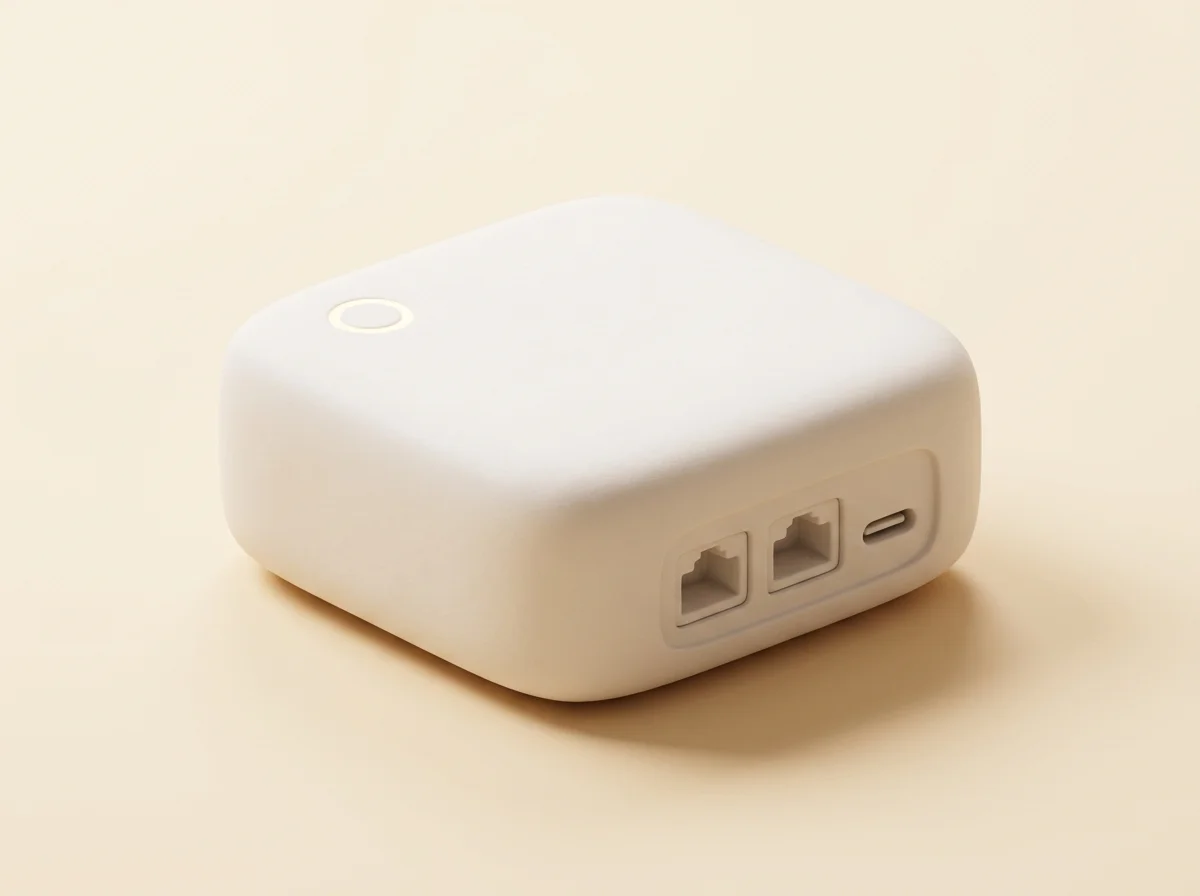
UniFi Express 7
Bottom line
Recommended with caveatsCompare its documented ports and management limits with the network you intend to build. Wireless throughput and coverage depend on clients, placement, interference, and the upstream connection; advertised radio rates are not a measured home result.
manage a small UniFi network; provide Wi-Fi and routing from one unit
The local-first grade is not a promise of hardware lifespan; review the evidence below.
* cloud is optional — counts as a pass, with the caveat above.
Researched from manufacturer documentation and published integration guides. A grade describes local control, open integration, and cloud dependence; it is not a guarantee of lifespan. How we evaluate
Added Jul 3, 2026
Key trade-offs
Why it stands out
Compare its documented ports and management limits with the network you intend to build. Wireless throughput and coverage depend on clients, placement, interference, and the upstream connection; advertised radio rates are not a measured home result.
What to weigh
Compare its documented ports and management limits with the network you intend to build. Wireless throughput and coverage depend on clients, placement, interference, and the upstream connection; advertised radio rates are not a measured…
About
UniFi Express 7 combines a gateway, Wi-Fi 7 access point, and UniFi Network management in one device.
Compatibility and limitations
Compare its documented ports and management limits with the network you intend to build. Wireless throughput and coverage depend on clients, placement, interference, and the upstream connection; advertised radio rates are not a measured home result. Check account, setup, remote-management, and service requirements separately. Combining roles in one unit also means a fault or restart can affect several network functions.
Research basis
This is a documentation-based overview. We have not independently tested this product or established its service life.
Specifications
| Model | UX7 |
|---|---|
| Wireless | Wi-Fi 7 |
| Roles | Gateway, access point, UniFi Network management |
Frequently Asked Questions
- No. Each client is limited by its own radio capabilities and network conditions. Many smart-home devices use older Wi-Fi standards.
Related Listings
Compare side by side →
Affiliate link — we may earn a commission at no extra cost to you.
Buy on Amazon