Philips Hue
Added Nov 20, 2025
About
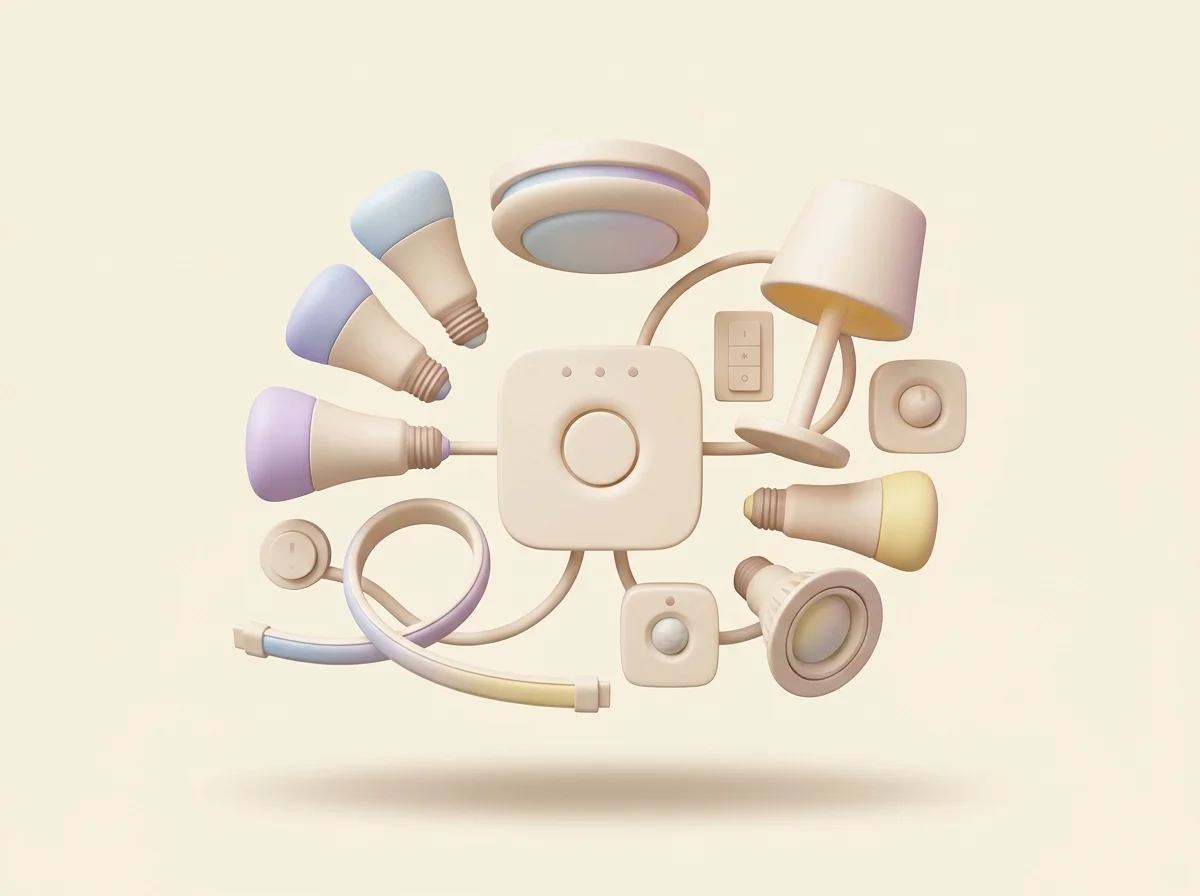
Philips Hue is the longest-running mainstream smart lighting ecosystem, sold since 2012 and made by Signify, the lighting company spun off from Philips. This listing covers the ecosystem as a whole: the Zigbee-based bulbs, light strips, lamps, and fixtures, plus the Hue Bridge that coordinates them. The Bridge connects to your router over Ethernet, stores and runs automations locally, and exposes a fully documented local REST API that has been a fixture of the smart home hobbyist world for more than a decade.
Hue earns a buy-it-for-life listing on track record more than on any single spec sheet. Bulbs sold ten years ago still pair with current bridges, the local API has remained stable across major platform shifts, and Signify has shipped firmware updates, including Matter support, to hardware that was already years old when the update arrived. In a category where products routinely die with their vendor's cloud, that history matters more than lumens.
Longevity Verdict
Hue bulbs are typically rated around 25,000 hours, which works out to well over a decade at a few hours of use per day. The deeper longevity story is the protocol: Hue lights speak standard Zigbee, so if Signify ever shut down, or you simply tired of the Bridge, the bulbs can be paired directly to any Zigbee coordinator such as Zigbee2MQTT or Home Assistant's ZHA. Your lights are not hostage to the company. The precedent is mostly reassuring: the original round v1 Bridge lost its cloud services in 2020, roughly eight years after launch, but local control kept working and the bulbs themselves carried forward to newer bridges without issue. The square v2 Bridge, released in 2015, is still supported and received Matter bridging through a free firmware update.
Local Control and Cloud Dependence
Automations configured on the Bridge run entirely on the Bridge; pulling your internet connection does not stop schedules, scenes, or control from paired accessories. Home Assistant talks to the Bridge over the local network with no cloud account involved. The caveats live in the official app: Signify began requiring a Hue account sign-in in the app in recent years, and remote access, geofencing, and some newer features route through the cloud. The local API remains open and documented, so third-party local control is unaffected by any of that.
Failure Modes and Repairability
Individual bulbs are sealed LED units and are not practically repairable; when one fails, usually from driver electronics rather than the LEDs themselves, you replace that bulb and nothing else changes. That modularity is the system's real durability story: there is no single bulb whose death takes anything else down. A failed Bridge is replaceable, though you will re-pair lights and rebuild automations unless you kept a backup through the app. Power-on behavior after an outage is configurable per bulb, a small but telling sign of mature firmware.
Warranty and Support
Most Hue bulbs and the Bridge carry a two-year manufacturer warranty in the US, with some fixtures listed longer; check the specific product page before buying. The more meaningful support signal is the update cadence: Signify has pushed security and feature firmware to bulbs and bridges continuously since launch. The reasonable worst case, Signify abandoning its cloud, leaves you with locally controlled Zigbee lights and an open local API, which is about as soft a landing as this industry offers.
Specifications
| Protocol | Zigbee 3.0 (bulbs also support Bluetooth) |
|---|---|
| Hub | Hue Bridge, Ethernet-connected, mains powered |
| Local API | Documented local REST API (CLIP v2, HTTPS) |
| Matter support | Yes, via free Hue Bridge firmware update |
| Capacity per Bridge | Up to 50 lights and about 12 accessories (standard Bridge) |
| Rated bulb life | Approx. 25,000 hours (typical Hue bulb) |
| Platforms | HomeKit, Alexa, Google Home, Home Assistant, SmartThings |
| Cloud dependency | Optional; Bridge automations and local API work offline |
| Warranty | 2 years on most bulbs and the Bridge (US) |
| First released | 2012 |
Frequently Asked Questions
- Do I need the Hue Bridge, or can I use the bulbs on their own?
- Most current Hue bulbs support Bluetooth for direct phone control, but the Bridge is what unlocks the local REST API, full automations, Matter bridging, and capacity for dozens of lights. For a buy-it-for-life setup, use the Bridge or pair the bulbs directly to your own Zigbee coordinator such as Zigbee2MQTT or Home Assistant ZHA.
- Does Philips Hue work without internet access?
- Yes. Schedules, scenes, and automations stored on the Bridge run locally, and Home Assistant controls the Bridge over your LAN. You lose remote access, geofencing, and voice assistants that depend on the cloud, and the official app now requires a Hue account sign-in, but day-to-day lighting control does not need the internet.
- What happens to my lights if Signify shuts down its servers?
- Local Bridge control and the local API would keep working, and because the bulbs are standard Zigbee devices, you could also re-pair them to an open coordinator like Zigbee2MQTT and run everything yourself. The hardware does not become a brick if the cloud disappears.
- Are older Hue bulbs still supported?
- Generally yes. Bulbs from the early generations still pair with current bridges. The one notable sunset was the original round v1 Bridge, which lost cloud features in 2020 about eight years after launch; the bulbs attached to it carried forward to newer bridges.
- Is Hue worth the premium over cheap Wi-Fi bulbs?
- If you value longevity, yes. You are paying for a stable local API, a decade-plus support record, standard Zigbee underneath, and consistent color quality across generations, which is exactly what bargain cloud-tied bulbs tend to lack.