Back to Blog
Best Smart Leak Sensors for Home Assistant (That Actually Last)
📖Guides⚖️Comparisons

Best Smart Leak Sensors for Home Assistant (That Actually Last)

Mar 3, 2026/4 min read

Leak detection is one of the few smart-home purchases that can pay for itself in a single incident — an average insurance claim for water damage runs into five figures. But the math only works if the sensor is still alive and reporting when the leak happens, which might be four years after you stuck it under the water heater. That makes leak sensors a pure buy-it-for-life category: battery life, radio reliability, and cloud independence matter far more than apps or alert sounds.

This guide names the specific sensors we'd deploy with Home Assistant today, and the supporting hardware that turns a detection into an automatic shutoff with no cloud in the loop.

What a BIFL-ready leak sensor needs

Three non-negotiables. First, a replaceable, standard battery (CR2032, CR2477, or AA) that lasts two-plus years — sealed rechargeable sensors become e-waste on their third birthday. Second, a local-first protocol: Zigbee or Z-Wave sensors keep reporting through your own coordinator when your internet is down, which is exactly when a frozen-pipe leak likes to happen. Third, a probe or contact design that survives sitting on a damp slab floor for years without corroding.

Top Zigbee pick: Aqara Water Leak Sensor T1

Aqara's Water Leak Sensor T1 is the value benchmark: IP67-sealed, a two-year-typical CR2032 battery, and rock-solid standard Zigbee that pairs directly with a Home Assistant coordinator — no Aqara hub required. Buy several; whole-house coverage at this price is the strategy. The same ecosystem logic applies to Aqara's door and window sensors, which share batteries, range behavior, and pairing quirks, so standardizing on one ecosystem simplifies the spares drawer.

View Listing

Our durability review of Aqara's contact sensor — same ecosystem, batteries, and Zigbee behavior as the leak sensor line.

Top Z-Wave pick: Zooz ZSE42 XS

If your mesh is Z-Wave, the Zooz ZSE42 XS is the pick: 700-series radio, a coin-cell that typically clears two years, and Zooz's unusually generous 5-year warranty — the longest in this category and a real signal about expected service life. Z-Wave's 908 MHz band also penetrates basements and crawl spaces better than 2.4 GHz Zigbee, which matters for sump pits and far corners.

The shutoff: turning detection into prevention

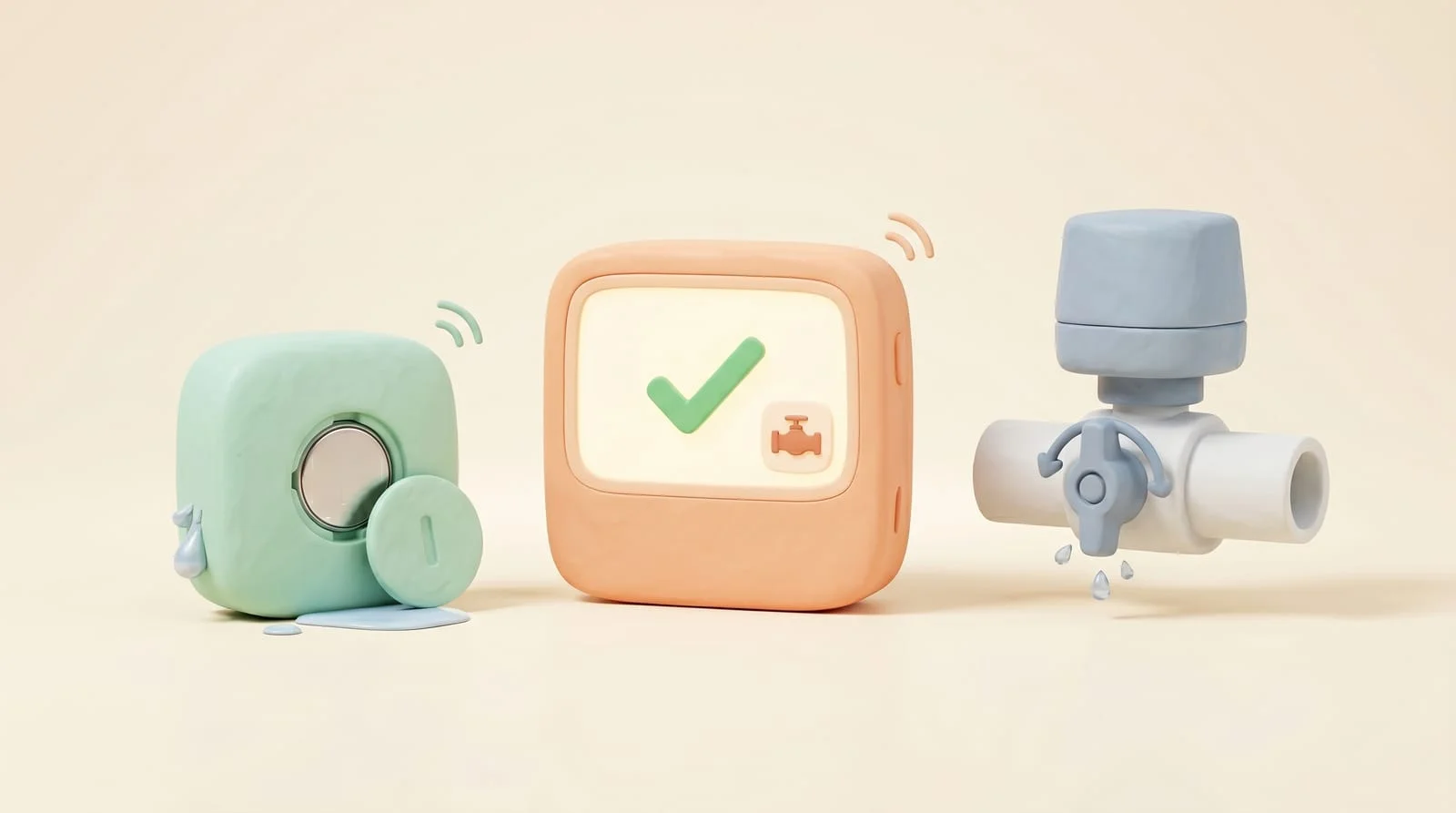
A sensor that only notifies you is half a system — the BIFL endgame is an automation that closes the water main while you're on vacation. A motorized ball valve on the main line, driven by a relay like the Shelly Plus 1, gives Home Assistant a hard-wired, local shutoff path: leak detected, valve closed, in under two seconds, internet optional. The Shelly's dry contacts drive 12V/24V valve actuators directly, and the device runs ESPHome or stock firmware with full local control.

View Listing

The relay we recommend for driving a motorized water shutoff valve from Home Assistant.

The hub that keeps it local

All of this assumes a hub that runs your automations locally. Home Assistant Green is the lowest-friction way in: plug it in, pair your Zigbee coordinator, and the leak-to-shutoff automation lives entirely on hardware you own. No subscription, no server dependency, and the automation fires even when your ISP is down.

View Listing

The plug-and-play local hub that runs leak-to-shutoff automations with no cloud dependency.

Placement and maintenance for the long haul

Put sensors where water pools first, not where it sprays: under the water heater's drain pan lip, behind the washing machine, under kitchen and bathroom sink traps, at the sump pit rim, and near the AC condensate line. Then maintain the fleet like the safety system it is: replace every battery on one calendar date annually regardless of reported level, touch each sensor's contacts with a damp cloth to confirm it still alarms, and test the valve automation twice a year. A leak sensor that has never been tested is a rumor, not protection.

Bottom line

Standardize on Aqara T1 sensors if you're Zigbee, Zooz ZSE42 if you're Z-Wave, and put the savings into a motorized valve driven by a Shelly relay. Run it all on a local hub and the whole system keeps working — detection through shutoff — for as long as the batteries you replace, with no company's continued existence required.