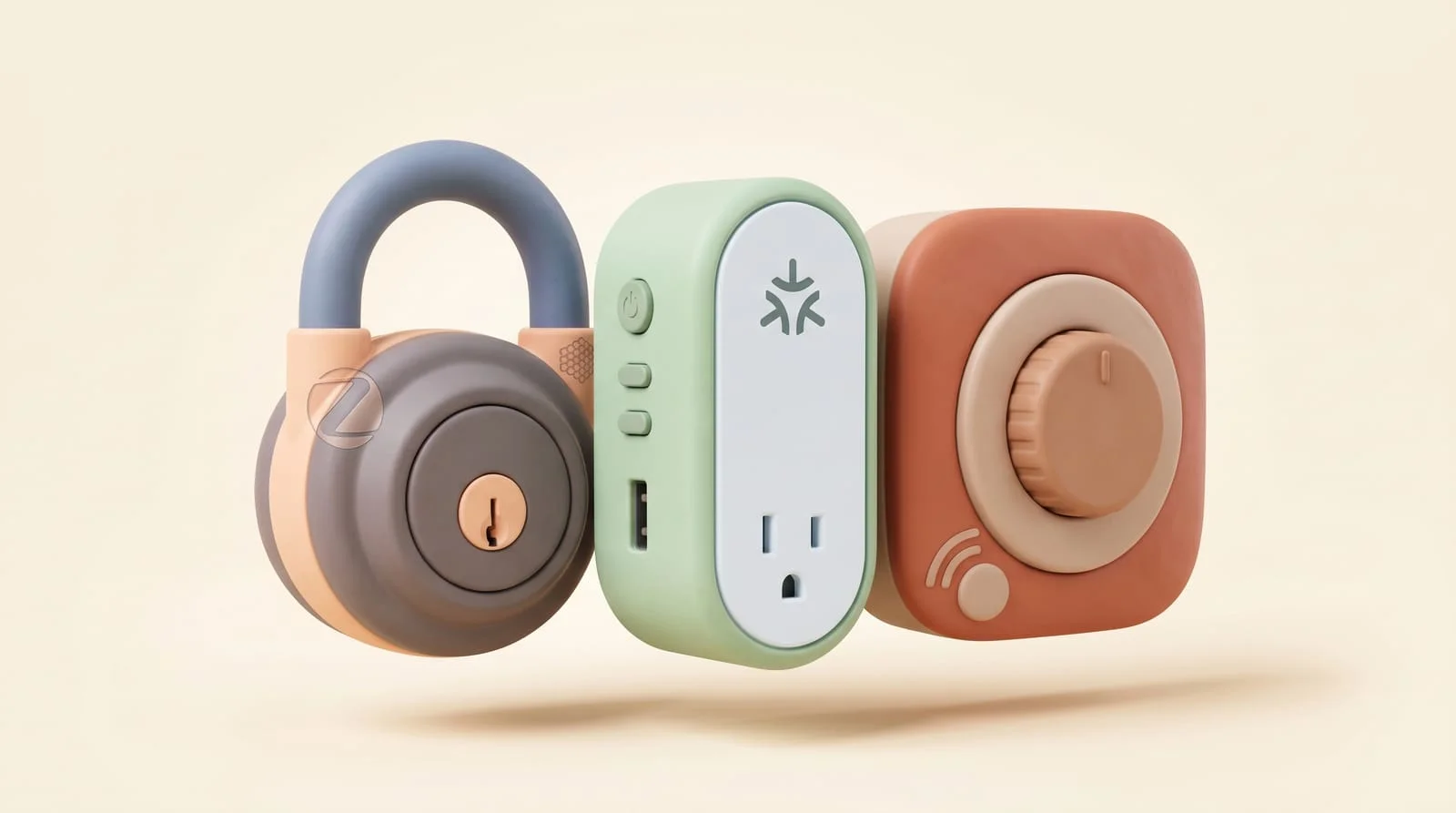
Matter, Z-Wave, and Zigbee: Plan for Compatibility
Choose a protocol by checking the functions you need today. A standard can make integration possible without establishing how long a product, cloud service, or controller will be maintained.
Compare the complete setup
For each device, list the controller, radio hardware, supported functions, and setup requirements. Zigbee uses a coordinator. Z-Wave requires a regional controller and supported device functions. A Matter-over-Thread device needs a Matter controller and Thread border router; those roles can be provided by the same compatible product, but they are distinct requirements.
Check feature coverage
A device may offer additional features in its vendor app that are absent from a shared-standard integration. Verify the specific controls and events you need. For example, a switch being controllable does not establish that a controller exposes every multi-tap action or indicator setting.
Prefer a documented recovery path
Check the current backup, migration, and reset instructions for your controller. Keep installation details and any required setup codes. Moving to another controller may require reconfiguration or pairing again; do not assume a standard makes recovery automatic.
Avoid buying around promised future features
Buy for the functions documented for the shipping hardware and software. A planned firmware feature or possible future module should not count as an available capability. Likewise, open-source code does not promise indefinite updates or replacement parts.
If you are comparing Home Assistant hubs, account for Yellow’s ended production rather than presenting it as a current-production upgrade. Existing ownership and a new purchase are different decisions.
Sources and scope
This guide is based on the linked documentation, checked September 23, 2026. It is not an in-house product test or a prediction of service life.