Browse
SONOFF Zigbee 3.0 USB Dongle Plus

SONOFF Zigbee 3.0 USB Dongle Plus

+Local Control+Open APINo Cloud Needed
🏠Hub📡Sensor

Added Dec 15, 2025

About

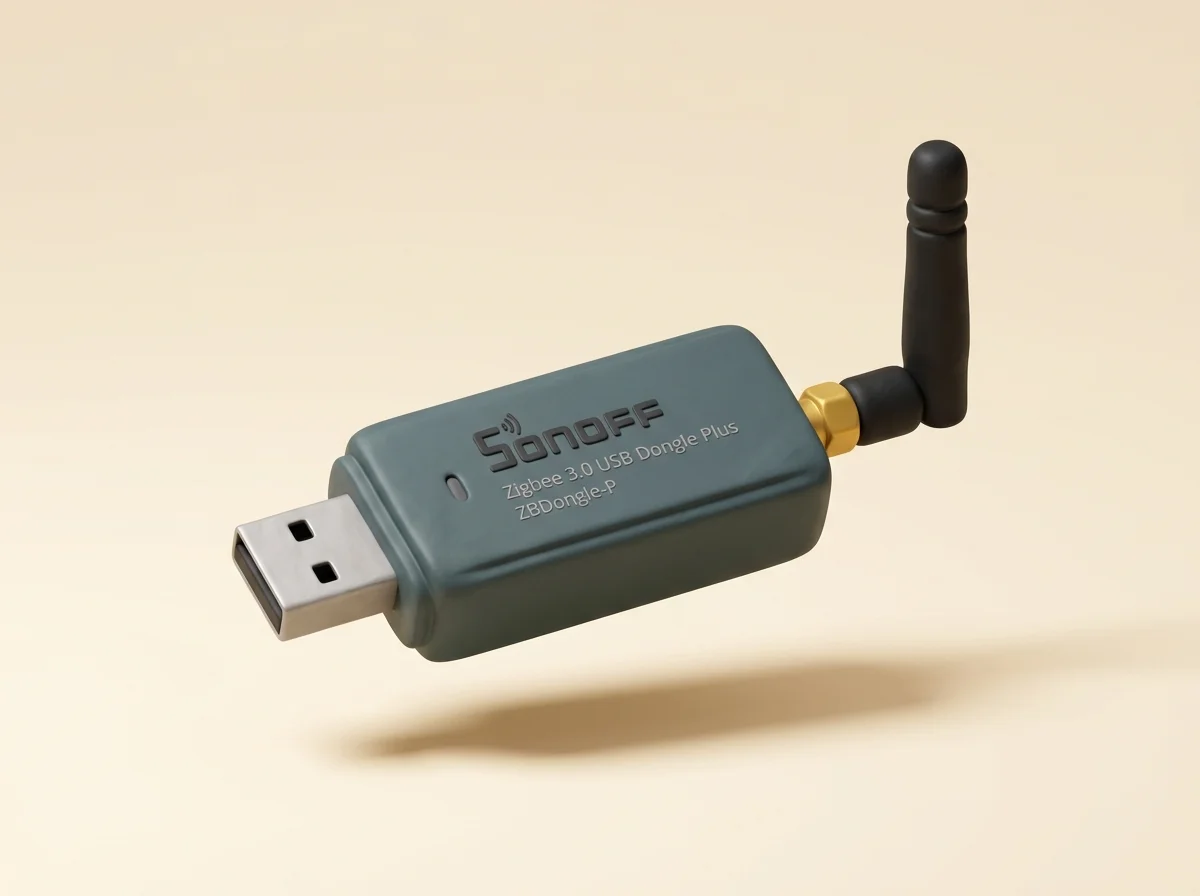
The SONOFF Zigbee 3.0 USB Dongle Plus, commonly known by its model name ZBDongle-P, is a USB Zigbee coordinator built around the Texas Instruments CC2652P radio chip with a +20 dBm power amplifier and an external SMA antenna. Plugged into a machine running Zigbee2MQTT or Home Assistant's ZHA integration, it becomes the brain of a fully local Zigbee network, pairing and controlling bulbs, sensors, switches, and plugs from hundreds of manufacturers without any proprietary hub, account, or cloud service involved.

It earns a buy-it-for-life listing because it is the opposite of a proprietary gateway: a commodity radio in a sturdy aluminum case, driven entirely by open-source software. SONOFF's cloud, mobile app, and corporate roadmap are irrelevant to its operation. The coordinator firmware itself is community-maintained Z-Stack code, openly published and flashable by the user, which means support does not expire when a product manager moves on or a server gets switched off.

Longevity Verdict

Zigbee is a mature, very widely deployed protocol, and the CC2652P is one of the best-supported coordinator chips in the open-source ecosystem. Zigbee2MQTT supports thousands of device models and gains more with every release, so the dongle's usefulness grows over time rather than decaying. The power amplifier and external antenna give it better range than most built-in hub radios, and the antenna is detachable, so it can be upgraded or replaced if damaged. There are no moving parts, no battery, and minimal heat. The realistic long-term picture is that this stick outlives several generations of the computer it is plugged into, because your Zigbee network's identity lives in software and migrates with a coordinator backup.

Failure Modes & Repairability

Failure modes are few and well understood. The USB connector and the CP2102N serial bridge can fail from physical abuse or power surges, and 2.4 GHz interference from nearby Wi-Fi or USB 3.0 ports can degrade performance — the standard fix is a short USB extension cable, which also improves antenna placement. If the dongle dies outright, recovery is straightforward: Zigbee2MQTT can back up the coordinator's network keys so a replacement stick adopts the existing network without re-pairing every device, which matters enormously once you have fifty sensors in the walls. Firmware updates are user-flashable over USB with no special hardware. At a street price near twenty-five dollars, repair largely means replacement — but a replacement that preserves the entire network is the next best thing to repair.

Warranty & Support

SONOFF's parent company ITEAD provides a limited manufacturer warranty, commonly around one year depending on region and reseller, and EU purchases carry two-year statutory consumer protection. As with most open-hardware-adjacent gear, the formal warranty matters less than the software story: the device's usefulness depends on Zigbee2MQTT and ZHA, both healthy open-source projects with large contributor bases and active discussion forums. One honest caveat for buyers: SONOFF also sells a newer ZBDongle-E variant based on a Silicon Labs chip, and the firmware ecosystems differ between the two models, so check which one you are actually ordering. For the CC2652P version listed here, community firmware support has been consistent for years and shows no sign of stopping.

Specifications

ChipsetTexas Instruments CC2652P
ProtocolZigbee 3.0
TX powerUp to +20 dBm (integrated power amplifier)
AntennaExternal, detachable SMA
USB interfaceUSB-A, CP2102N USB-to-serial bridge
EnclosureAluminum
FirmwareZ-Stack coordinator, user-flashable (router firmware available)
Software supportZigbee2MQTT and ZHA (Home Assistant)
WarrantyLimited manufacturer warranty, commonly ~1 year (region-dependent)

Frequently Asked Questions

Do I need a SONOFF hub, app, or account to use this dongle?
No. It is a bare coordinator radio. All intelligence lives in the open-source software you pair it with — Zigbee2MQTT or Home Assistant's ZHA — running on your own hardware, with no SONOFF cloud involvement at any point.
Should I use it with ZHA or Zigbee2MQTT?
Both work well. ZHA is built into Home Assistant and simpler to start with; Zigbee2MQTT runs as a separate service, tends to add support for new and obscure devices faster, and exposes everything over MQTT for non-Home-Assistant setups.
What happens if SONOFF discontinues this product?
Almost nothing. The coordinator firmware is community-maintained, and a network backup lets a different CC2652-based stick take over your existing network without re-pairing devices, so you are not tied to this exact model or vendor.
How many devices can it handle?
Dozens of devices directly, and substantially more — commonly a hundred or beyond — once mains-powered Zigbee devices like plugs and bulbs join the mesh as routers and relay traffic for battery sensors.
How is this different from the SONOFF ZBDongle-E?
The ZBDongle-P listed here uses a Texas Instruments CC2652P; the ZBDongle-E uses a Silicon Labs chip with experimental multiprotocol options. Both are well supported, but firmware tooling differs, and the P variant has the longer track record with Zigbee2MQTT.