Browse
Important:

This product has been discontinued

This product is no longer in production. There is a new model available.
Home Assistant Green
Home Assistant Yellow
Featured

Home Assistant Yellow

+Local Control+Open APINo Cloud Needed
🏠Hub

Added Nov 15, 2025

About

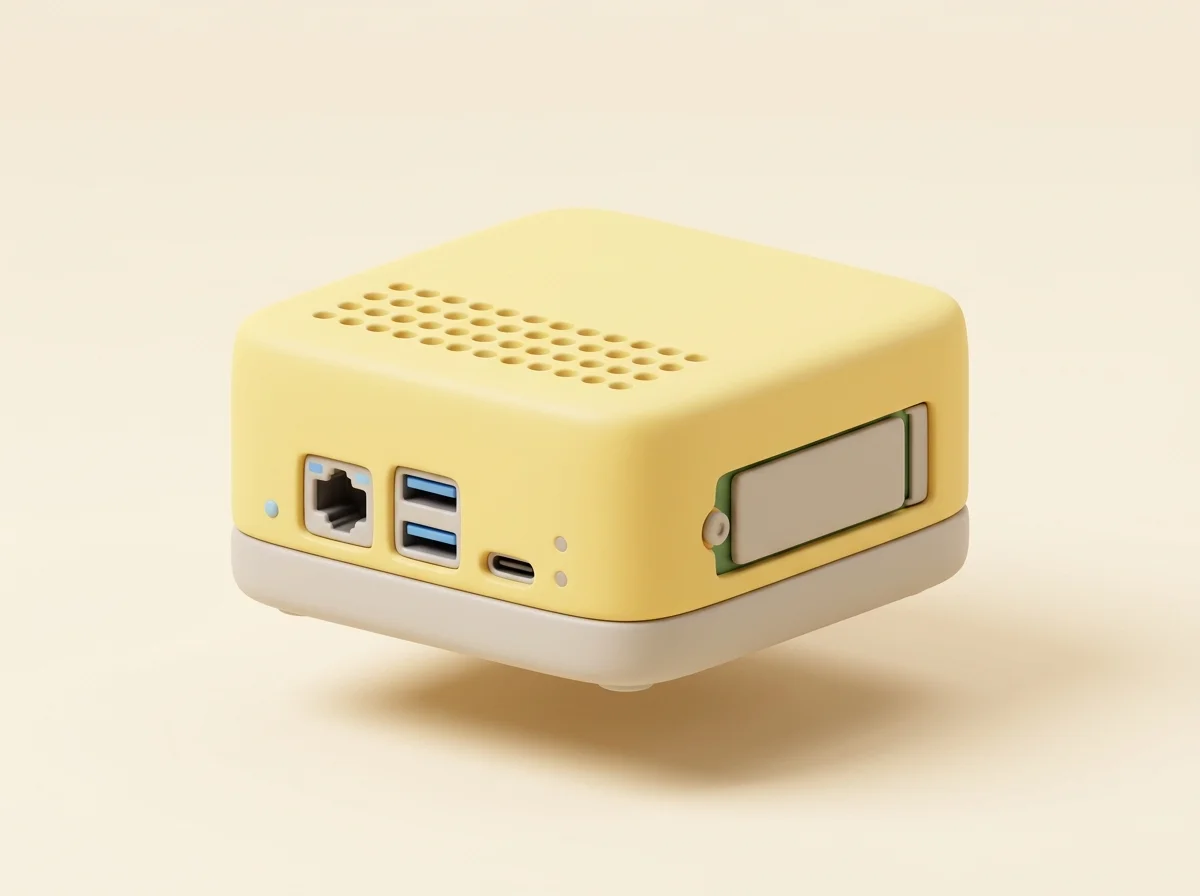
Home Assistant Yellow is the official purpose-built hub from Nabu Casa, the company that employs the core developers of the open-source Home Assistant project. It pairs a Raspberry Pi Compute Module 4 with a carrier board designed specifically for home automation: Gigabit Ethernet, an M.2 slot for NVMe storage, two USB-A ports, and a Silicon Labs MGM210P radio module that handles Zigbee 3.0 and is Thread-capable for Matter ecosystems. It ships with Home Assistant OS preinstalled, so it boots straight into a fully local smart home controller with no account, no subscription, and no cloud dependency.

Yellow earns a buy-it-for-life listing for structural reasons rather than build-quality marketing. The software is open source with one of the largest contributor communities in home automation, the board schematics are published, and nothing about the device requires a manufacturer server to function. If Nabu Casa shut down tomorrow, Yellow would keep running every automation exactly as before, and the community could keep shipping operating system updates indefinitely. Almost no other smart home hub can honestly make that claim.

Longevity Verdict

The weakest link in most smart home hubs is the business model, not the hardware, and Yellow removes that failure mode entirely. Home Assistant has shipped regular releases for roughly a decade and supports thousands of integrations, so device support tends to grow over time instead of shrinking. The compute module is socketed rather than soldered: when the CM4 eventually feels slow, you can swap in a higher-RAM module, or migrate your entire configuration to completely different hardware using the built-in backup and restore. Storage is the usual wear item on an always-on Linux box that logs sensor data around the clock, and the M.2 slot addresses it directly by letting you run the database on a replaceable NVMe SSD instead of a fragile microSD card.

Failure Modes & Repairability

Realistic failure modes are mundane and mostly user-serviceable. The USB-C power supply is a commodity part that costs little to replace, and a Power-over-Ethernet variant removes the wall adapter entirely. The NVMe SSD swaps out with a single screw, and a fresh Home Assistant OS install plus a backup restore gets you back online in under an hour. The socketed CM4 means even a dead compute module is a parts replacement, not a funeral. If the onboard Zigbee radio ever failed, a cheap USB coordinator stick would restore that function without replacing the hub. Because the schematics are public, component-level diagnosis is actually possible, which is rare in this category. The main preventive maintenance is software rather than hardware: trimming the recorder database settings reduces write wear and keeps long-term storage healthy.

Warranty & Support

Yellow is sold through CrowdSupply and authorized distributors, and formal warranty terms are modest — typically a one-year limited manufacturer warranty through most channels, with EU buyers additionally covered by two-year statutory consumer protection. The honest assessment is that the paper warranty matters less here than it does for closed products, because the real support story is the open ecosystem itself: detailed official documentation, published hardware design files, and one of the most active community forums in the hobby. Nabu Casa funds development partly through its optional Home Assistant Cloud subscription, which adds convenient remote access and voice assistant integration but is never required. For a device whose entire value is local control, the practical warranty is that the software outlives the company's obligations — and the project's decade-long track record supports that.

Specifications

ComputeRaspberry Pi Compute Module 4 (socketed)
RadioSilicon Labs MGM210P — Zigbee 3.0, Thread-capable
NetworkingGigabit Ethernet (PoE variant available)
StorageM.2 slot for NVMe SSD, plus CM4 eMMC
USB2x USB 2.0 Type-A
PowerUSB-C (or PoE on the PoE variant)
Operating systemHome Assistant OS, preinstalled
Open hardwareSchematics and design files published
WarrantyTypically 1-year limited; 2-year EU statutory protection

Frequently Asked Questions

Does Home Assistant Yellow work without an internet connection?
Yes. All automations, the dashboard, and the built-in Zigbee radio run entirely on your local network. Internet is only needed for software updates, optional cloud remote access, and integrations that are themselves cloud-based.
What happens if Nabu Casa goes out of business?
Very little. Home Assistant is open source and community-developed, so the hub keeps working and the OS can keep receiving updates from the community. Your configuration is also portable to any other supported hardware via standard backups.
Is the Raspberry Pi Compute Module 4 included?
It depends on the variant. Yellow has been sold both as a kit where you supply your own CM4 and as standard bundles that include one. Check the exact configuration before buying, since CM4 availability and bundled specs have varied over time.
How difficult is setup for a non-technical user?
Initial setup is genuinely easy: plug in Ethernet and power, open the onboarding page in a browser, and follow the wizard. Home Assistant itself has a learning curve as you go deeper, but the hardware requires no flashing or command-line work.
Can I repair or upgrade it myself?
More than almost any competing hub. The compute module is socketed and swappable, the NVMe SSD is user-replaceable, the power supply is a commodity part, and the schematics are published, so informed repair is realistic rather than theoretical.