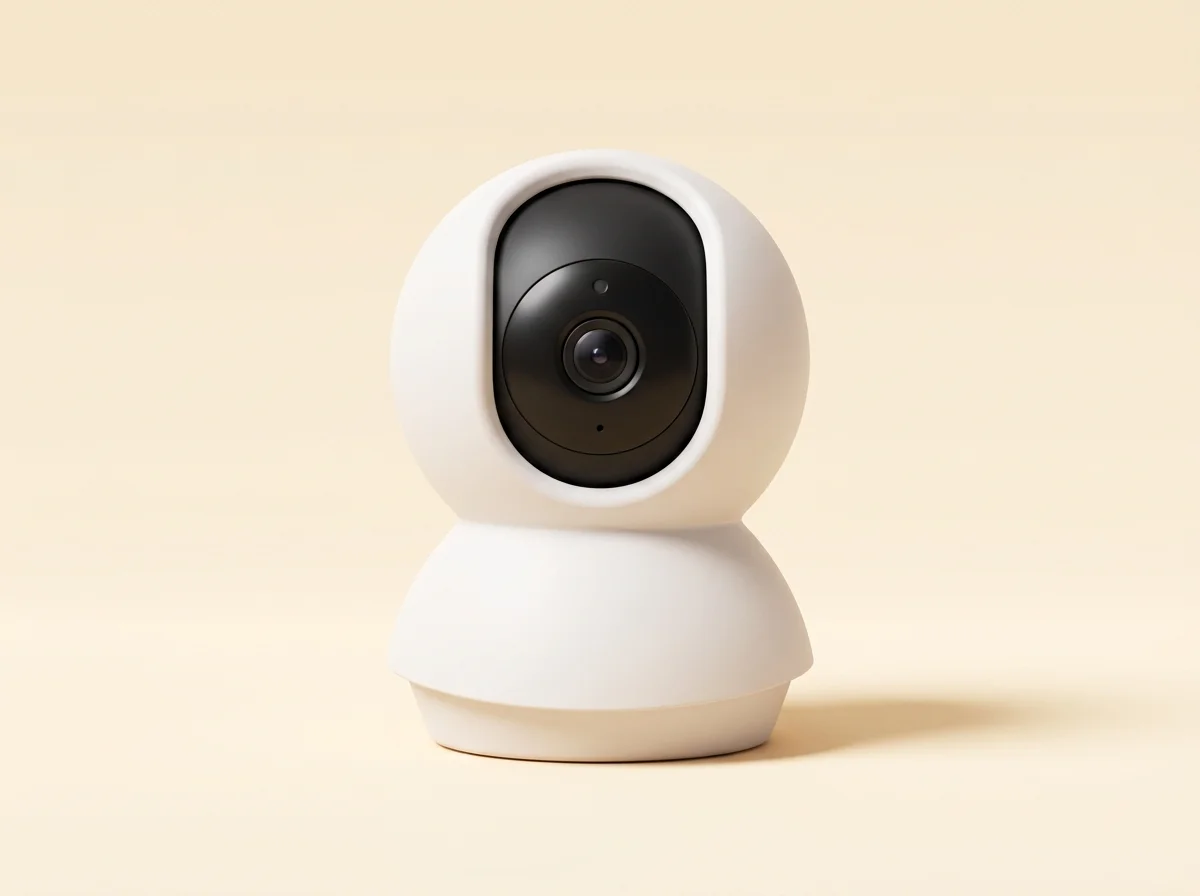
TP-Link Tapo C200
Added Dec 12, 2025
$27typical
Buy on AmazonResources
Affiliate link β we may earn a commission at no extra cost to you.
About
The TP-Link Tapo C200 is a budget indoor pan-and-tilt camera offering 1080p video, 360-degree horizontal and 114-degree vertical rotation, infrared night vision to roughly 30 feet, two-way audio, and motion detection with configurable zones. It typically sells for under thirty dollars, which makes it the cheapest product in this directory by a wide margin, and that raises the obvious question of what a disposable-priced gadget is doing on a buy-it-for-life list.
The answer is value per year of service rather than heirloom build quality. The C200 has been in production for years across minor hardware revisions, has an enormous installed base, records to its own microSD card without any subscription, and, unusually for its price class, can serve an RTSP stream to third-party recorders. The honest caveats are reflected in this listing's flags: initial setup and the official app experience run through TP-Link's cloud, there is no official open local API, and the pan-tilt mechanism adds a motorized wear point that fixed cameras do not have.
Longevity Verdict A camera at this price is built to a cost, and it shows in the all-plastic housing and the motorized gimbal, which is the most likely component to wear or develop noise after years of frequent panning; treating it as a mostly stationary camera that you occasionally reposition will extend its life considerably. Electronically, these units have a reputation for simply running for years on a shelf or windowsill. The microSD card is the true consumable and should be a high-endurance card. Realistic expectation: several years of service, with the understanding that a failure is a cheap replacement rather than a repair. That is a different buy-it-for-life proposition than a PoE camera, and we flag it openly.
Cloud Dependency, With an Escape Hatch Setup, firmware updates, notifications, and remote viewing all run through the Tapo app and TP-Link's cloud account system, and there is no official local API, so on paper this is a cloud-tied product. The partial escape hatch matters, though: the camera can record around the clock to a local microSD card with no subscription, playback of that footage works in the app on your LAN, and the C200 supports RTSP streaming through a locally configured camera account, which lets recorders such as Frigate, Blue Iris, or Synology pull the feed without touching TP-Link's servers. If TP-Link's cloud disappeared, an already-configured camera would likely keep recording locally and serving RTSP, but you could not count on setting up a new one. The optional Tapo Care subscription adds cloud clip storage; nothing requires it.
Failure Modes & Repairability Common end-of-life modes are a worn or noisy pan-tilt motor, a failed cheap microSD card being mistaken for a dead camera, and 2.4 GHz Wi-Fi congestion causing dropouts. None of these are user-repairable in any official sense, TP-Link sells no spare parts, and at this price the economics of repair never work. Mitigations are simple: minimize automated patrolling, buy a high-endurance card, and give the camera a strong Wi-Fi signal.
Warranty & Support TP-Link is a large, stable vendor and has kept Tapo firmware and app support active across the line for years; the C200 carries a limited manufacturer warranty, commonly listed at one to two years depending on region and revision, and conservative buyers should assume one year. Verdict: not heirloom hardware, but an honest, subscription-free workhorse whose RTSP support and trivial replacement cost make it a defensible long-haul choice for low-stakes indoor monitoring.
Specifications
| Resolution | 1080p Full HD |
|---|---|
| Pan / tilt range | 360 deg horizontal, 114 deg vertical |
| Night vision | 850nm infrared, up to ~30 ft |
| Connectivity | 2.4 GHz Wi-Fi only |
| Local storage | MicroSD card slot (up to 256GB on recent revisions) |
| Streaming | RTSP via local camera account; no official open API |
| Audio | Two-way audio with built-in mic and speaker |
| Privacy mode | Physical lens-park privacy mode |
| Power | Wired USB power adapter (indoor use) |
| Warranty | 1-2 year limited, varies by region |
Frequently Asked Questions
- Does the Tapo C200 require a subscription to record video?
- No. The camera records continuously or on motion events to a local microSD card, and you can review that footage in the Tapo app with no recurring fee, which is the core of its value proposition at this price. TP-Link sells an optional Tapo Care subscription that adds cloud storage for motion clips and richer notifications, useful as off-site backup if the camera might be stolen or damaged, but nothing about day-to-day recording, live viewing, or playback requires it. Just budget a few dollars extra for a quality high-endurance microSD card, because the card is not included in the box. If you run several Tapo cameras, note that each records to its own card; there is no included central recorder, so multi-camera households often graduate to pulling every unit's RTSP stream into one self-hosted NVR for unified storage and search.
- Can I use the C200 with Home Assistant, Frigate, or Blue Iris without the cloud?
- Largely yes, with caveats. The C200 supports RTSP and ONVIF-style streaming through a camera account you create locally in the Tapo app, and that stream goes directly from the camera to your recorder over your LAN with no TP-Link servers involved, so Frigate, Blue Iris, Synology, and Home Assistant can all consume it. The caveats: initial setup still requires the Tapo app and a TP-Link cloud account, pan-tilt control over third-party protocols is limited compared with the app, and TP-Link has occasionally changed authentication behavior in firmware updates, so the self-hosting community watches updates before applying them. If cloud-free operation is the entire point for you, set the camera up, create the local account, verify the stream in your recorder, and then consider blocking the camera's internet access at your router, a configuration many C200 owners run for years.
- What happens if TP-Link shuts down the Tapo cloud service?
- An honest answer has two halves. A camera that is already set up would most likely keep doing its local jobs, recording to its microSD card and serving its RTSP stream to a third-party recorder, because those functions run on the device and your LAN. But setup of new or factory-reset units depends on the Tapo app and TP-Link's account system, notifications and remote viewing would die with the cloud, and firmware updates would end. TP-Link is one of the largest networking vendors in the world, so a near-term shutdown is unlikely, but the dependency is real and is why this listing carries a cloud-required flag. The pragmatic hedge is to keep your recorder, not the camera, as the system of record: if the app-dependent half ever degrades, your footage pipeline through RTSP continues unaffected, and the sunk cost of a sub-thirty-dollar camera is trivial.
- Is the Tapo C200 suitable for outdoor use or as a serious security camera?
- No on outdoor use: it is an indoor-only device with no weather sealing or IP rating, and it should never be mounted outside, even under an eave; TP-Link's Tapo line includes purpose-built outdoor models for that. As for serious security, set expectations by price. It is excellent for low-stakes monitoring, checking on pets, a baby room shared with caution, package drop spots inside a porch door, or keeping an eye on a workshop. For evidentiary-quality coverage of entry points, a wired PoE camera with local NVR recording, like the Reolink units in this directory, is the buy-it-for-life answer. Within those limits the pan-tilt range is genuinely useful indoors, letting one cheap camera sweep an entire room on demand instead of buying two fixed units, which is the use case where the C200 earns its keep.
- How long will a C200 realistically last, and what wears out first?
- Treated gently, several years is a reasonable expectation, and many owners report units running far longer; the model's long production run means replacement and community knowledge are easy to find. The first thing to wear is usually not the electronics but the microSD card, which fails after sustained continuous recording and is cheaply replaced, so always suspect the card before the camera. The motorized pan-tilt gimbal is the main mechanical wear point: constant automated patrolling ages it fastest, while a camera that mostly sits still lasts longest. There is no battery to degrade since it runs on wall power. Buy it expecting workhorse service rather than heirloom permanence, keep a spare high-endurance card on hand, and the C200's effective cost per year of useful monitoring lands among the lowest of anything in this directory.
$27typical
Buy on AmazonResources
Affiliate link β we may earn a commission at no extra cost to you.
$27typical
Buy on AmazonResources
Affiliate link β we may earn a commission at no extra cost to you.