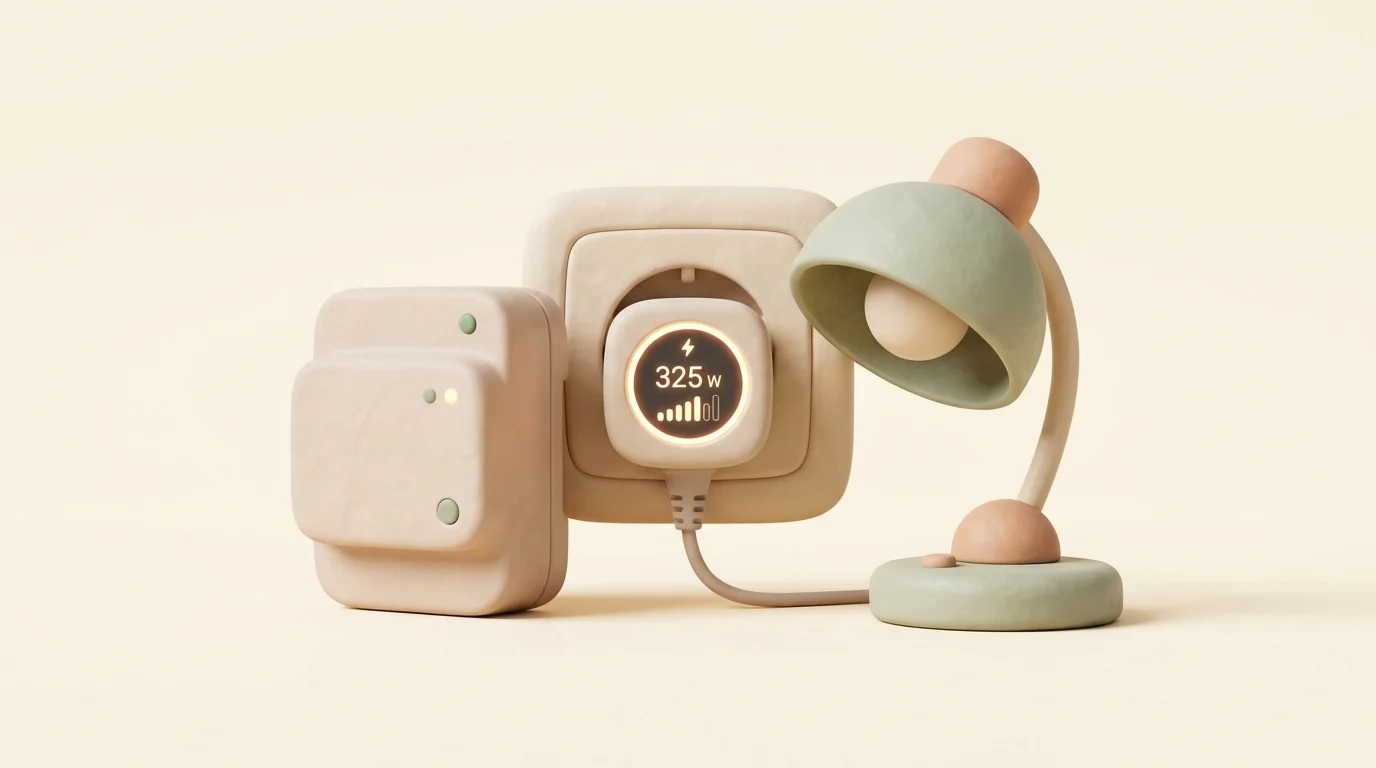
Energy-Monitoring Plugs and Relays: Loads and Integration
Choose an energy monitor for its permitted load and supported integration. A large amp figure on a product page is not a universal continuous-load rating, and energy readings alone do not diagnose appliance faults.
Zooz ZEN04: Z-Wave with load restrictions
Zooz documents switching and energy reporting for compatible controllers. Its load limits differ by load type, and its FAQ excludes washers, dryers, and refrigerators. It also prohibits connecting power strips or splitters. Check the exact revision and manufacturer restrictions instead of selecting solely by a wattage total.
Emporia: cloud-connected monitoring
Emporia’s North American Smart Plug has a 10 A continuous rating and a 15 A peak rating with duration restrictions. It must not be described as a continuous 15 A device. Other regional models have their own specifications.
The standard app and cloud path should not be described as fully local Home Assistant operation. We have not validated a firmware conversion for the listed hardware revision and do not recommend buying on the assumption that one is available.
Shelly 1PM Gen3: installed relay and metering
Shelly documents local API and MQTT support with the supplied firmware. The device is an installed relay, not a plug-in adapter, and its output is not a potential-free contact. Have a qualified installer check the wiring, load, and required protection. Do not infer suitability for a heater, motor, or other appliance solely from the headline rating.
Decide what the measurements are for
A supported meter can help observe usage patterns. We have not calibrated these products or established that a change in power draw identifies a failing appliance. Use the manufacturer’s stated measurement limits, and distinguish monitoring from control: a load may have restrictions even when you only intend to measure it.
There is no substantiated lifespan ranking here. Compare the documented functions, installation requirements, and dependencies of the exact models.
Sources and scope
This guide is based on the linked documentation, checked September 23, 2026. It is not an in-house product test or a prediction of service life.