Back to Blog
mmWave Presence Sensors: The Fix for Lights That Turn Off While You're Still in the Room
📖Guides

mmWave Presence Sensors: The Fix for Lights That Turn Off While You're Still in the Room

Jun 11, 2026/3 min read

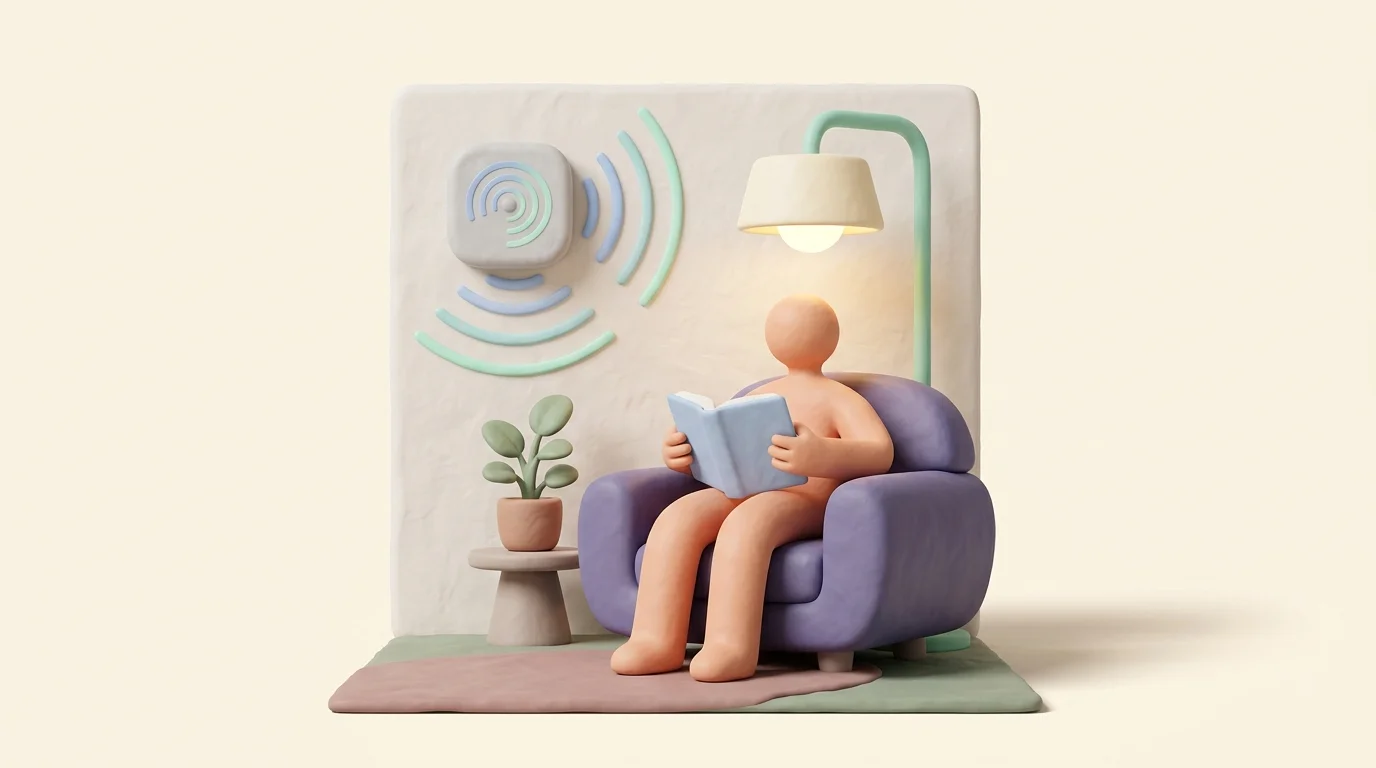
Everyone who automates lighting hits the same wall: you sit down to read, stop moving, and three minutes later the room goes dark. You wave an arm at the ceiling like you're hailing a cab. That's not a configuration problem — it's a hardware limit. PIR motion sensors detect changes in infrared, so a person holding still is invisible to them, full stop.

Millimeter-wave radar is the actual fix. mmWave sensors detect micro-movement — breathing, a turning page, fingers on a keyboard — so a room reads as occupied the entire time a human is in it. Presence, not motion. It's the difference between automations you trust and automations you apologize for.

Why firmware matters more than the radar

The mmWave modules themselves come from a handful of manufacturers; what separates a sensor you'll still be running in 2032 from e-waste is the firmware. Sensors locked to a vendor app die with the vendor. Sensors running ESPHome — the open-source firmware platform that Home Assistant's own developers maintain — are updateable, hackable, and fully local forever. You can reflash, retune, and integrate them no matter what happens to the company that sold them. For a device whose whole job is quietly working for a decade, that's the buy-it-for-life criterion.

The dedicated pick: Athom Human Presence Sensor

The Athom Human Presence Sensor is the focused tool: a compact mmWave radar occupancy sensor that ships with ESPHome preinstalled. Plug it in, adopt it in Home Assistant, and it appears as a presence entity with tunable sensitivity and detection distance — no cloud account, no proprietary app, no firmware lock-in. Put one in every room where the sit-still problem bites: office, living room, reading corner, bathroom.

View Listing

Our review of the Athom mmWave sensor — ESPHome out of the box, presence detection that survives stillness.

The multi-sensor pick: Apollo Automation AIR-1

If you're mounting a sensor in a room anyway, the Apollo Automation AIR-1 makes the same spot do double duty. It's an indoor air quality monitor built by a small US company specifically for the Home Assistant community — also ESPHome out of the box — measuring the pollutants that actually matter indoors. Pair occupancy with air data and your automations get smarter: run the ventilation when the office is occupied and CO2 climbs, not on a dumb schedule.

View Listing

The HA-native air quality monitor we pair with presence sensing for ventilation automations.

Placement: the five-minute tuning that makes it work

mmWave sees through stillness but also sees things you don't want it to. Three rules. Don't aim it at a ceiling fan, curtains over an HVAC vent, or a busy window — slow oscillation reads as presence. Mount at roughly seated-chest height, aimed across the room rather than down a hallway, so the zone matches where humans actually are. And set the detection distance just past the far wall of the zone you care about; radar happily penetrates drywall, and an unconfigured sensor will hold your bedroom lights on because someone is in the bathroom next door.

Bottom line

Keep your PIR sensors for hallways and stairs, where fast motion-triggered response is exactly right. For every room where people sit still, mmWave is the upgrade that makes occupancy automation finally trustworthy — and ESPHome-based hardware from Athom and Apollo means the sensors will outlast the companies, the apps, and probably the drywall they're screwed to.