Apollo Automation AIR-1
Added Mar 3, 2026
About
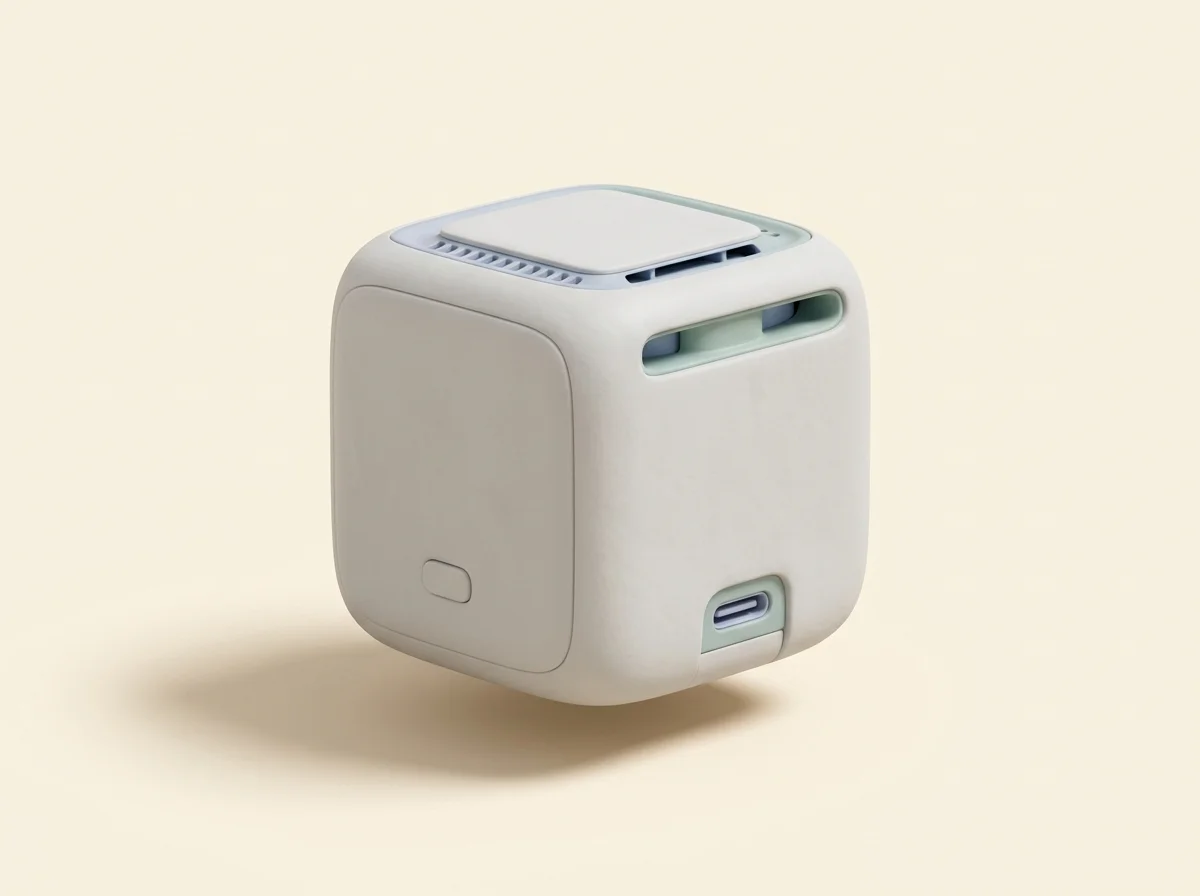
The Apollo Automation AIR-1 is a compact indoor air quality monitor built by a small US company specifically for the Home Assistant community. It ships running ESPHome, the open-source firmware platform, and measures the pollutants that actually matter indoors: particulate matter across several size bins, volatile organic compounds, temperature, and humidity from its core Sensirion sensor module, with optional add-ons including a dedicated CO2 sensor for configurations that include it. Plug it into USB-C power, add it to your Wi-Fi, and it appears in Home Assistant over the local ESPHome API with no app, no account, and no cloud anywhere in the loop.
The buy-it-for-life argument is the openness of the whole stack. Apollo publishes its ESPHome configurations and design files on GitHub, documents the hardware on a public wiki, and builds around commodity, well-documented sensor modules. Consumer air quality monitors are notorious for dying when their company's app or cloud dashboard shuts down; the AIR-1 structurally cannot die that way, because there is no service behind it to shut down. Every reading is produced locally and consumed locally.
Longevity Verdict
Expect the electronics to outlast the sensors, and the sensors to be the maintenance item. The ESP32 microcontroller and power circuitry are low-stress and should run for many years continuously. Metal-oxide gas sensors and optical particulate sensors do drift and age over years of operation, which is true of every air quality monitor at every price; the difference here is that the AIR-1's sensors are standard modules on a documented board, so a drifted sensor is a replaceable part rather than a reason to discard the device. On the software side, ESPHome is among the most actively developed projects in home automation, stewarded under the Open Home Foundation alongside Home Assistant, and because the device configuration is public, the community can keep the AIR-1 updated indefinitely, with or without Apollo. If Apollo Automation disappeared tomorrow, your monitor would not lose a single feature.
Failure Modes & Repairability
This is one of the most repairable devices in the directory. The case opens, the design files and configurations are on GitHub, and the sensing is done by socketed or board-mounted commodity modules from established vendors, so the realistic failure modes, a worn particulate sensor, a flaky USB-C connection, a drifted gas sensor, are all addressable by someone comfortable with basic electronics. Calibration is also in your hands: ESPHome exposes offsets and baseline controls, and CO2 sensors in equipped models support forced recalibration against outdoor air. The trade-offs to know going in: it is Wi-Fi only on 2.4 GHz, it needs constant USB-C power, temperature readings can run slightly warm from internal heat (a known, correctable offset situation common to compact monitors), and as a small-batch product from a small company, fit and finish is hobbyist-grade rather than consumer-polished.
Warranty & Support
Apollo Automation is a small company, and you should assume a modest formal warranty, typically around one year through its store, rather than a big-brand support apparatus; confirm current terms at purchase. What Apollo does offer is unusually direct support through its community channels, fast firmware iteration, and complete transparency about the hardware. For a BIFL buyer, the open firmware, published designs, and replaceable commodity sensors are worth more than a long warranty on a sealed cloud device, because they convert every future failure from a replacement decision into a repair decision.
Specifications
| Core sensor | Sensirion module: PM1.0/2.5/4.0/10, VOC index, temperature, humidity |
|---|---|
| CO2 | Dedicated CO2 sensor on equipped configurations |
| Microcontroller | ESP32-class, Wi-Fi 2.4 GHz |
| Firmware | ESPHome preinstalled; configs and design files on GitHub |
| Integration | Native ESPHome API, fully local; auto-discovered by Home Assistant |
| Cloud dependency | None; no app or account |
| Power | 5V USB-C, continuous |
| Extras | RGB status LED, optional add-on sensors per configuration |
| Origin | Designed and assembled by a small US company |
| Warranty | Limited, typically ~1 year via Apollo store (confirm at purchase) |
Frequently Asked Questions
- Does the AIR-1 need a hub, app, or cloud account?
- No. It connects to 2.4 GHz Wi-Fi and is auto-discovered by Home Assistant through the ESPHome integration. There is no vendor app, no account, and no cloud service. All readings stay on your local network.
- Can I use it without Home Assistant?
- Home Assistant is the intended pairing and by far the smoothest path. ESPHome devices can also publish over MQTT or expose a local web interface with some configuration changes, but if you do not run Home Assistant or another ESPHome-aware controller, you are buying the wrong product.
- How accurate is it, and do the sensors wear out?
- It uses standard Sensirion sensor modules, the same class of parts found in much more expensive monitors, so accuracy is solid for residential monitoring rather than lab use. Optical PM and metal-oxide VOC sensors do drift over years; ESPHome exposes calibration offsets, CO2 forced recalibration is supported on equipped models, and the modules themselves are replaceable.
- What happens if Apollo Automation goes out of business?
- The device keeps working exactly as before, since nothing depends on Apollo's servers. The ESPHome configuration and design files are public on GitHub, so the community can continue building firmware updates for the hardware indefinitely.
- Can I modify the firmware?
- Yes. Adopt it into your own ESPHome dashboard, edit the public YAML configuration to change sensors, intervals, LED behavior, or automations that run on-device, and flash over the air. The device is yours at the firmware level, which is the entire point.