Athom Human Presence Sensor
Added Mar 3, 2026
About
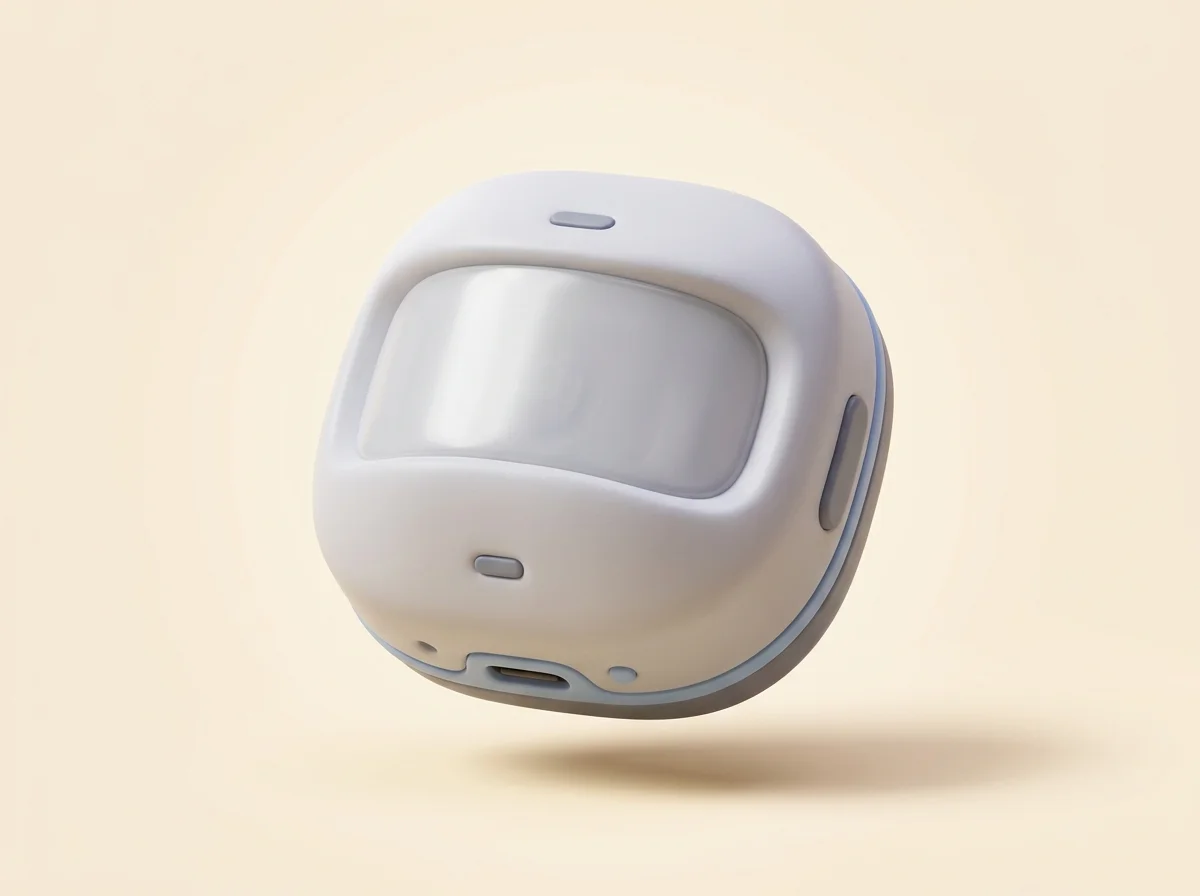
The Athom Human Presence Sensor is a compact mmWave radar occupancy sensor that ships with ESPHome, the open-source firmware platform, preinstalled. Where a PIR motion sensor sees only movement and marks a room empty the moment you sit still, millimeter-wave radar detects micro-movements like breathing and typing, so lights stay on while you are actually present. The hardware pairs an ESP32-class Wi-Fi microcontroller with an LD2410-family radar module, the same combination behind most of the DIY presence-detection builds in the Home Assistant community, except here it arrives assembled, cased, and flashed, typically for around twenty dollars.
It earns a buy-it-for-life listing almost entirely because of what is on the flash chip. ESPHome firmware means there is no vendor app, no account, no cloud service, and no proprietary protocol anywhere in the stack. The device announces itself to Home Assistant over your local network via the native ESPHome API, and every behavior, detection zones, sensitivity, timeout, reporting intervals, is defined in a YAML configuration you can read, edit, and recompile yourself. Athom publishes its device configurations on GitHub, which functions as living documentation of exactly how the hardware is wired.
Longevity Verdict
The lifespan story here is unusually good for cheap electronics. The components are commodity parts (ESP32 microcontroller, LD2410-type radar, USB-C power input) with no batteries to wear out and modest thermal load, so the hardware should plausibly run for many years of continuous duty. More importantly, the device cannot be orphaned by its manufacturer. If Athom disappeared tomorrow, the firmware would keep working untouched, and the open ESPHome configuration means the community can keep compiling updates for the hardware indefinitely. ESPHome itself is one of the most actively maintained projects in the home automation world, now under the Open Home Foundation umbrella alongside Home Assistant, which is about as durable a software foundation as this hobby offers. The honest limitations: it is Wi-Fi only on 2.4 GHz, so it occupies a slot on your network rather than a low-power mesh, and it requires constant USB power, which is inherent to mmWave radar's power draw rather than a design flaw.
Failure Modes & Repairability
Likely failure points are the USB-C power connector, the cheap wall adapter you power it with (use a known-good one), and, rarely, the radar module itself. Because the design is open and the parts are commodity, a soldering iron and a two-dollar LD2410 module can resurrect a dead unit, something that is true of almost nothing else in consumer smart home hardware. Misbehavior is more often configuration than hardware: mmWave sensors detect fans, curtains, and pets, so expect an evening of tuning sensitivity and zones via ESPHome or the radar's Bluetooth tuning app to get clean results.
Warranty & Support
Athom is a small Chinese manufacturer selling direct, and its formal warranty coverage is modest, typically in the range of one year through its store, so treat the warranty as a nice-to-have rather than the safety net. The real warranty is architectural: open firmware, published configurations, commodity parts, and a massive community that documents every quirk of the LD2410 radar. For local-first households, that beats a long paper warranty on a cloud-locked device every time.
Specifications
| Sensor type | mmWave radar (LD2410-family module) |
|---|---|
| Microcontroller | ESP32-class, Wi-Fi 2.4 GHz |
| Firmware | ESPHome preinstalled, open configuration on GitHub |
| Detection | Presence + micro-movement; distance reporting, tunable zones |
| Typical range | Up to ~5-6 m (configurable) |
| Power | 5V USB-C, continuous (no battery) |
| Integration | Native ESPHome API, fully local; MQTT possible |
| Cloud dependency | None; no account or app required |
| Warranty | Limited, typically 1 year via Athom store |
Frequently Asked Questions
- Do I need a hub or any cloud account?
- No hub and no account. The sensor joins your 2.4 GHz Wi-Fi and appears in Home Assistant automatically via the ESPHome integration. Everything runs locally; the device never needs to reach the internet, though ESPHome firmware updates are easier with it online briefly.
- How is mmWave different from a PIR motion sensor?
- PIR detects changes in infrared, so it only fires on motion and times out when you sit still. mmWave radar detects tiny movements like breathing, so it knows a room is occupied even when you are motionless on the couch. The trade-off is more tuning, since radar can also see fans and swaying curtains.
- Can I reflash or customize the firmware?
- Yes, that is the point. Athom publishes the ESPHome YAML configuration on GitHub. You can adopt the device in the ESPHome dashboard, edit sensitivity, zones, timeouts, and exposed sensors, and flash over the air. You can also wipe it and run entirely custom firmware if you prefer.
- What happens if Athom shuts down?
- Functionally nothing. The firmware is open and runs locally, the configuration is public, and the parts are commodity ESP32 and LD2410 modules. The community can maintain and recompile firmware for this hardware indefinitely, with or without Athom.
- Does it run on battery?
- No. mmWave radar draws too much power for practical battery operation, so the sensor needs constant 5V via USB-C. Plan placement around an outlet or a USB power run.